

Protection4Less provides affordable security camera installation for homes and businesses throughout Southern California. Call or text (562) 556-7545 to schedule your free estimate.
Project Overview
We recently completed a security camera installation for a steel fabrication company in Santa Fe Springs, California. The project included three PTZ security cameras connected through a wireless bridge using Ubiquiti Rocket and Beam antennas. This system uses IP cameras connected to an NVR. Learn more about the difference in our guide NVR vs DVR Security Camera Systems.
The goal of the system was to monitor a large outdoor industrial area where running underground network cable would have been difficult. Using wireless point-to-point technology allowed us to connect the cameras reliably over a long distance.
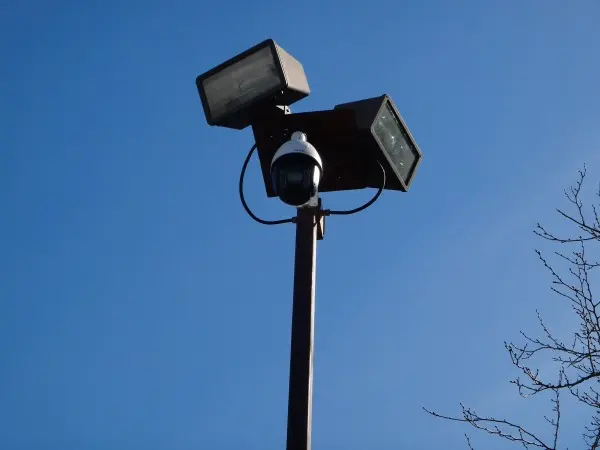

PTZ Camera Installation
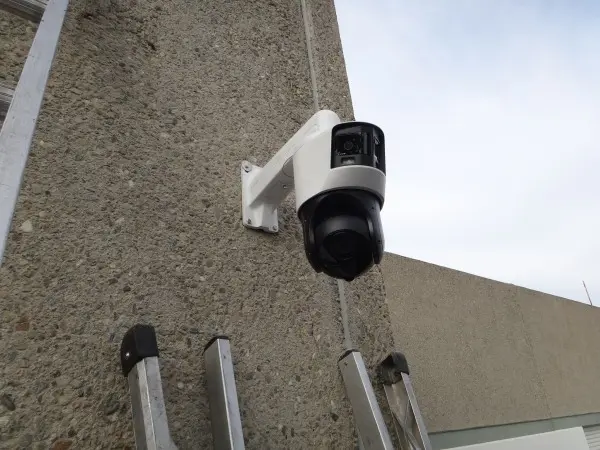
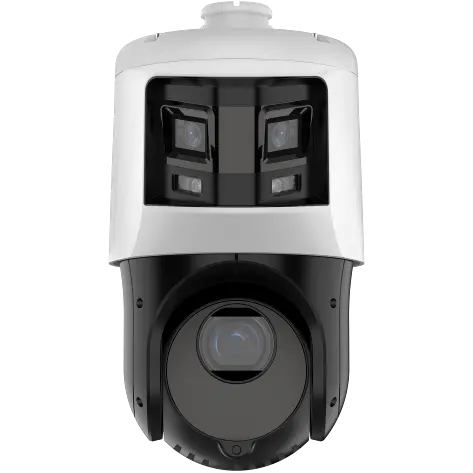
We installed three PTZ (Pan-Tilt-Zoom) security cameras two mounted on metal posts and one on an elevated container to provide wide coverage of the facility.
PTZ cameras allow the user to:
- Pan left and right
- Tilt up and down
- Zoom in to capture details at long distances
These cameras are ideal for industrial yards, warehouses, and large outdoor areas where a fixed camera cannot cover everything.
The cameras provide clear video both day and night and allow the property owner to monitor activity remotely from a smartphone, tablet, or computer.


Wireless Link Using Rocket and Beam Antennas
Because of the size of the property, we used a Ubiquiti wireless bridge system to connect the cameras.
The installation included:
- One Ubiquiti Rocket radio with directional antenna
- Two Ubiquiti Beam antennas
- Alignment and frequency configuration to avoid interference
The next picture shows the wireless interference present at the site.
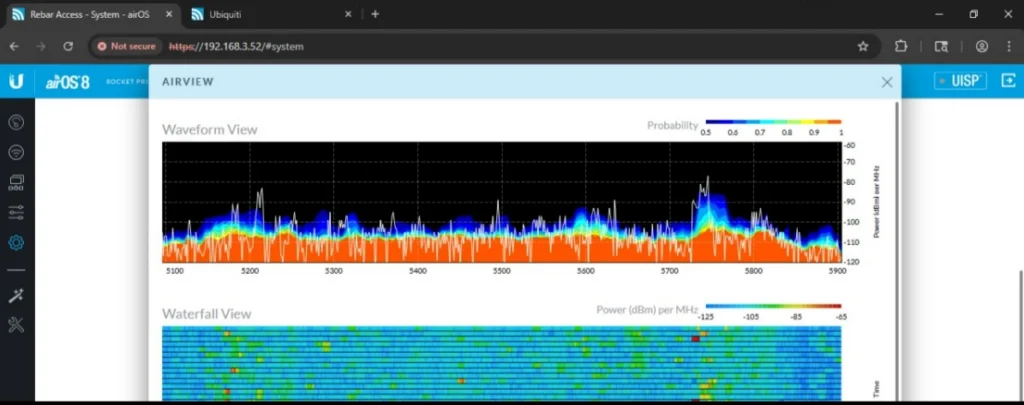
After analyzing the wireless interference at the site, we selected a clean frequency and established the wireless link between the Rocket Prism access point and the two LiteBeam antennas installed across the property.
The Rocket distributes the wireless signal to two remote LiteBeam antennas, effectively splitting the connection so both locations can receive network access. One of the links shown in the dashboard is approximately 984 feet away, with signal levels of -69 dBm and -62 dBm, indicating a stable and reliable connection. The graph shows radio noise across the 5 GHz spectrum.
Colors represent signal power:
- Blue / Green → low interference
- Yellow / Orange / Red → stronger interference
- Noise spikes around 5200–5300 MHz
- Another stronger area around 5700–5750 MHz
- 5740 MHz was the central frecuency choosen
This wireless bridge provides enough bandwidth to transmit video from the PTZ security cameras while eliminating the need to run long underground network cables across the facility.
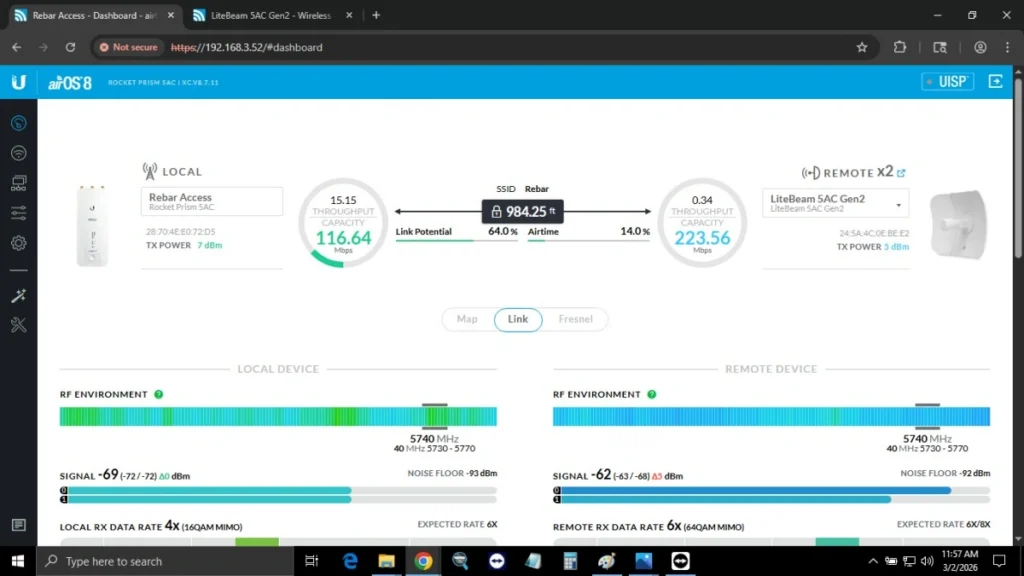
After analyzing the wireless interference at the site using spectrum analysis, we selected a clean operating frequency around 5750 MHz to establish the wireless link. The Rocket Prism access point distributes the wireless signal to two LiteBeam antennas, effectively splitting the connection so both remote locations can receive network access.
The dashboard above shows one of the links located approximately 984 feet away. The signal levels of -69 dBm and -62 dBm indicate a stable connection capable of transmitting video from the PTZ security cameras installed on the property.
This wireless bridge allows the camera system to communicate reliably across the facility without the need to run long underground network cables.