
When choosing a security camera system, one of the most common questions homeowners and businesses ask is whether they should use an NVR system with IP cameras or a DVR system with analog cameras. While both systems are designed to record and store video footage, the technology behind them is very different.
Understanding how each system works will help you choose the right solution based on image quality, scalability, installation, and long-term reliability.
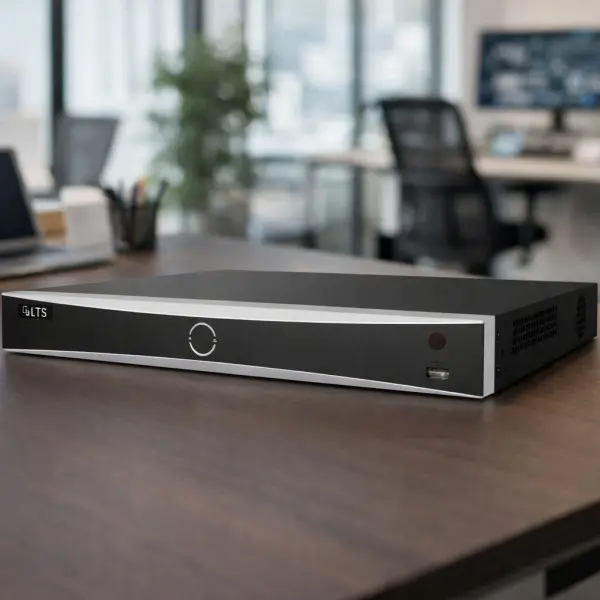
NVR system / power provided by NVR-PoE
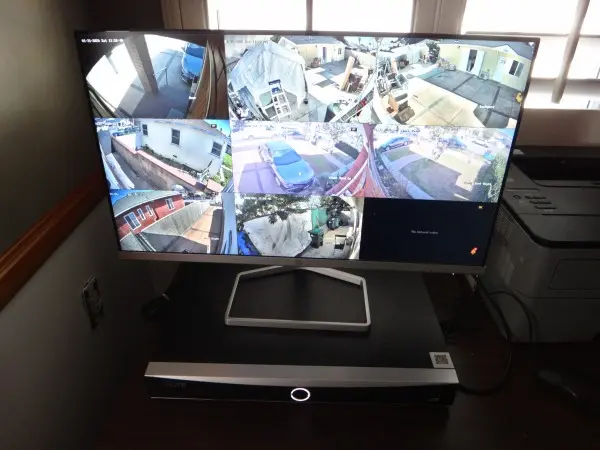
DVR System with power suply

What Is an IP Camera System with an NVR?
IP cameras capture video digitally at the camera itself. Each camera has its own IP address and sends video data through an Ethernet cable or a wireless network to the NVR. Because the video is already digital, there is no loss of quality during transmission. Most IP cameras use Power over Ethernet (PoE), meaning a single Ethernet cable provides both power and data, simplifying installation.
Key Features of IP Camera Systems
High resolution (2MP, 4MP, 8MP/4K and higher)
Sharp digital zoom without heavy image distortion
Advanced features like motion detection, human/vehicle detection, line crossing, and face recognition
Easy remote access via mobile apps or web browsers
Flexible installation with long cable runs over Ethernet
Advantages of NVR + IP Cameras
Superior image quality and clarity
Better performance in low-light conditions
Easier system expansion (add cameras without replacing the recorder)
Future-proof technology with frequent firmware updates. IP camera systems are ideal for homes, businesses, warehouses, offices, and properties that require detailed video evidence and remote monitoring.
What Is an Analog Camera System with a DVR?
An analog security camera system uses cameras that transmit analog video signals to a Digital Video Recorder (DVR). The DVR is responsible for converting the analog signal into a digital format for recording and playback.
How Analog Cameras Work
Analog cameras send raw video through coaxial cables (RG59 or RG6) directly to the DVR. The DVR then digitizes the signal, compresses it, and stores it on a hard drive.
These systems typically require two cables per camera: one for video and one for power, although some setups combine power and video using siamese cable.
Key Features of Analog Camera Systems
- Lower camera and equipment cost
- Simple, traditional technology
- Reliable for short cable runs
- Basic motion recording and scheduling
Advantages of DVR + Analog Cameras
Lower upfront cost
- Works well with existing coaxial wiring
- Straightforward setup for small systems
- Stable technology with minimal configuration
Modern analog systems (HD-Analog, HD-TVI, HD-CVI, AHD) can support higher resolutions than older analog systems, but they are still limited compared to IP cameras.
Key Differences Between NVR and DVR Systems
| Feature | NVR (IP Cameras) | DVR (Analog Cameras) |
|---|---|---|
| Camera type | Digital IP cameras | Analog cameras |
| Video processing | Done at the camera | Done at the DVR |
| Video quality | Higher (up to 4K and beyond) | Lower to moderate |
| Cabling | Ethernet (PoE) | Coaxial + power |
| Installation | Cleaner, more flexible | More cabling required |
| Scalability | Easy to expand | Limited by DVR channels |
| Smart features | Advanced AI analytics | Basic motion detection |
| Future support | Strong | Becoming outdated |