
Choosing between wired and wireless security cameras is one of the most common questions we get from homeowners and businesses in La Mirada, Montebello, and Downey. Each type of system has advantages depending on the property, layout, and security needs.

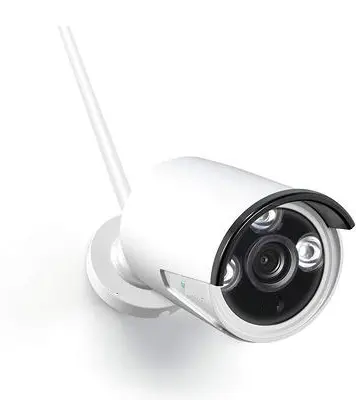
Wired vs Wireless Security Cameras: What Works Best in Local Installations
In many of our recent installations across La Mirada and nearby cities, wired systems are often preferred for long-term reliability, especially in larger properties or businesses. Wireless systems, on the other hand, are commonly used in smaller homes or situations where running cables is not practical. The right choice depends on the specific layout and how the system will be used day-to-day.
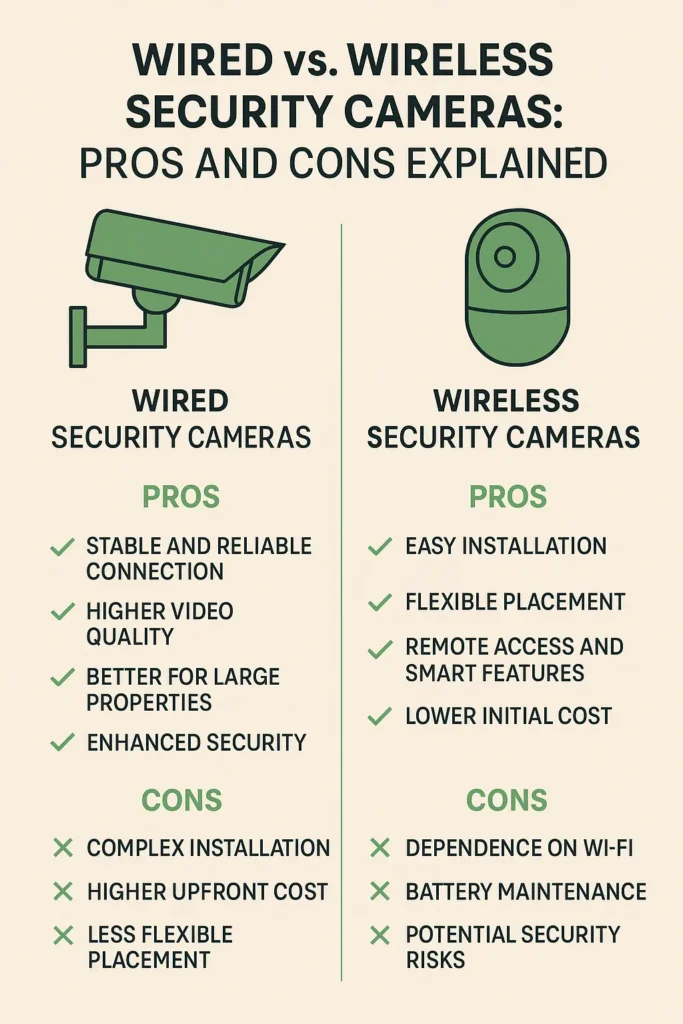
Many homeowners installing security cameras in La Mirada, Montebello, and Downey choose wired systems because they offer better reliability and stable recording compared to wireless cameras.
Wired vs Wireless Security Cameras: Key Differences
Wired and wireless security camera systems both serve the same purpose, but they differ significantly in how they are installed, how they perform over time, and how reliable they are in different environments.
Wired systems are physically connected to a recorder using cables, which provides a stable and consistent connection. Because they do not rely on Wi-Fi, wired cameras are less likely to experience signal drops, interference, or delays. This makes them a strong option for larger properties, businesses, or installations where consistent recording is critical.
Wireless systems, on the other hand, transmit video over a Wi-Fi network. They are easier and faster to install because they do not require running cables through walls or ceilings. This flexibility makes them a popular choice for smaller homes or situations where a quick setup is needed. However, their performance depends heavily on the strength and stability of the internet connection.
Another important difference is long-term reliability. Wired systems typically require less maintenance once installed and can handle multiple cameras without affecting performance. Wireless systems may require occasional troubleshooting, such as reconnecting devices, maintaining batteries (for some models), or improving network coverage.
Security is also a consideration. Wired systems are generally more secure because the data is transmitted through physical connections. Wireless systems can be secure as well, but they rely on proper network configuration, strong passwords, and updated firmware to prevent unauthorized access.
In terms of cost, wireless systems often have a lower initial installation cost due to reduced labor. Wired systems may cost more upfront because of the installation process, but they tend to provide more consistent performance over time, especially in demanding environments.